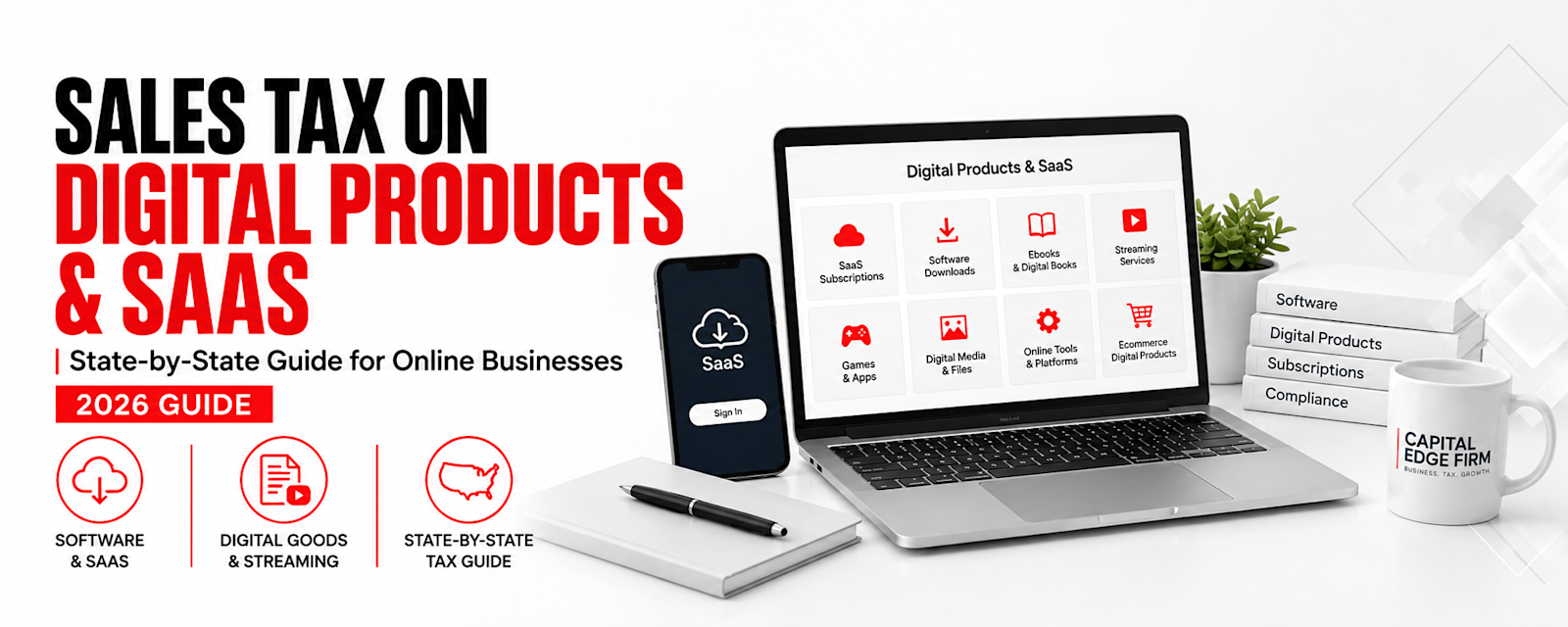
Vender algo por internet no significa automáticamente que la transaction sea tax-free.
Un business puede vender un producto sin caja, warehouse, shipping label ni entrega física y aun así crear sales tax obligations en múltiples estados.
Por ejemplo:
Cloud accounting software
CRM subscriptions
AI software
Downloadable apps
Mobile apps
Ebooks
Online games
Music downloads
Streaming
Digital photographs
Databases
Digital reports
Todos son “digitales”. Pero para sales tax pueden ser productos completamente diferentes.
Un estado puede gravar downloaded software y no SaaS. Otro puede gravar ambos. Otro puede gravar SaaS solamente para business use. Otro puede aplicar tax solamente al consumer. Y otro puede gravar streaming mientras exime ebooks.
Por eso no existe una respuesta nacional como “SaaS siempre lleva sales tax” o “Digital products son tax-free.”
La pregunta correcta comienza con:
¿Qué vendemos?
¿Cómo lo recibe el customer?
¿Quién lo compra?
¿Dónde lo utiliza?
¿Qué es un Digital Product?
No existe una única federal sales tax definition.
Los estados utilizan conceptos como:
Digital goods
Specified digital products
Digital codes
Prewritten software
Canned software
Remote-access software
Digital automated services
Information services
Data processing
SaaS
Streamlined Sales Tax proporciona definitions estandarizadas para determinados specified digital products, especialmente digital audio, audiovisual y books. Pero cada participating state puede decidir si los grava o exime.
Uniform definition ≠ uniform taxability.
¿Qué es SaaS para Sales Tax?
SaaS normalmente proporciona acceso remoto a software mantenido por el provider o un tercero.
Ejemplos:
Accounting
CRM
Payroll
Project management
Design tools
AI platforms
Productivity tools
Databases
Pero los estados pueden clasificarlo de maneras completamente diferentes.
Texas → Data Processing
Washington → Digital Automated Service / Remote Access Software
New York → Prewritten Software
Minnesota → Online Hosted Software, generalmente not taxable.
SaaS vs. Downloaded Software vs. Custom Software
Downloaded Prewritten Software
El customer recibe standardized software electrónicamente. Muchos estados lo gravan.
SaaS
El software permanece alojado remotamente. Taxability varía muchísimo.
Custom Software
Software desarrollado específicamente para un customer puede recibir tratamiento diferente. Pero modificar standard software no convierte automáticamente toda la transaction en custom software exempt.
Digital Products y SaaS por Estado — 2026
Esta tabla es una general reference. Digital products pueden incluir audio, video, ebooks, games, software, digital codes y subscriptions, y diferentes productos dentro del mismo estado pueden recibir tratamientos diferentes.
Estado | SaaS — Regla General 2026 | Digital Products |
Alabama | Taxable | Generalmente taxable |
Alaska | No statewide sales tax | Local taxes pueden aplicar |
Arizona | Taxable | Generalmente taxable |
Arkansas | Generalmente not taxable | Mixed |
California | Generalmente not taxable durante 2026 | Generalmente exempt electrónicamente; cambia en 2027 |
Colorado | Generalmente not taxable | Muchos digital goods taxable; electronic software tiene excepciones |
Connecticut | Taxable | Taxable; business-use software generalmente 1% |
Delaware | No statewide sales tax | No general statewide sales tax |
Florida | Generalmente not taxable | Generalmente exempt de ordinary sales tax |
Georgia | Generalmente not taxable | Determinados digital products taxable |
Hawaii | Taxable | Generalmente sujeto a GET |
Idaho | Generalmente not taxable | Permanent-use digital goods pueden ser taxable |
Illinois | Generalmente not taxable | Generalmente exempt a nivel estatal; revisar Chicago |
Indiana | Generalmente not taxable | Specified digital products pueden ser taxable |
Iowa | Personal taxable; qualifying business use generalmente exempt | Mixed / commercial exemptions |
Kansas | Generalmente not taxable | Digital goods generalmente exempt; electronic software puede ser taxable |
Kentucky | Taxable | Generalmente taxable |
Louisiana | Taxable | Taxable |
Maine | Generalmente not taxable | Depende del physical equivalent |
Maryland | Taxable | Digital goods taxable; ciertos IT/software services 3% |
Massachusetts | Taxable | Digital media frecuentemente exempt; software taxable |
Michigan | Generalmente not taxable | Digital goods generally exempt; software puede ser taxable |
Minnesota | Generalmente not taxable | Specified digital products taxable |
Mississippi | Generalmente not taxable | Specified digital products taxable |
Missouri | Generalmente not taxable | Generalmente exempt |
Montana | No statewide sales tax | No general statewide sales tax |
Nebraska | Generalmente not taxable | Determinados specified products taxable |
Nevada | Generalmente not taxable | Electronic products generalmente exempt |
New Hampshire | No statewide sales tax | No general statewide sales tax |
New Jersey | Generalmente not taxable | Specified digital products taxable |
New Mexico | Taxable | Generalmente sujeto a Gross Receipts Tax |
New York | Taxable | Ordinary digital media puede ser exempt; software taxable |
North Carolina | Generalmente not taxable | Muchos digital products taxable |
North Dakota | Generalmente not taxable | Digital goods generalmente exempt; electronic software taxable |
Ohio | Business use taxable; personal generalmente not | Mixed |
Oklahoma | Generalmente not taxable | Generalmente exempt |
Oregon | No statewide sales tax | No general statewide sales tax |
Pennsylvania | Taxable | Generalmente taxable |
Rhode Island | Taxable | Specified digital products taxable |
South Carolina | Taxable | General digital goods pueden ser exempt; streaming puede ser taxable |
South Dakota | Taxable | Electronic products generalmente taxable |
Tennessee | Taxable | Specified digital products taxable |
Texas | Taxable; normalmente 80% del qualifying data-processing charge | Digital goods/data processing pueden ser taxable |
Utah | Taxable | Generalmente taxable |
Vermont | Taxable | Digital products y remote software generalmente taxable |
Virginia | Generalmente not taxable | Electronic digital goods generally exempt |
Washington | Taxable | Broadly taxable |
West Virginia | Taxable | Mixed |
Wisconsin | Generalmente not taxable | Specified/additional digital goods generally taxable |
Wyoming | Generalmente not taxable | Permanent-use products generally taxable |
Washington, D.C. | Taxable | Generalmente taxable |
Florida
Florida generalmente no considera ordinary electronically delivered digital goods como taxable tangible personal property.
SaaS también suele quedar fuera de ordinary sales tax cuando solamente existe remote access. Pero ciertos services pueden quedar sujetos a Communications Services Tax.
Por tanto Florida SaaS generally exempt no significa every digital service in Florida is tax-free.
California: Prepárese para 2027
Durante 2026, electronically transmitted digital products continúan generalmente fuera del California sales tax cuando no se entrega taxable physical media.
Pero el 1 de enero de 2027 cambia la regla. California incluirá generalmente digital products dentro de sales and use tax.
CDTFA ya incluye expresamente:
Prewritten software
Electronically transferred software
Remotely accessed software
SaaS
en su implementación para 2027.
Una SaaS company con California customers debería utilizar el resto de 2026 para revisar:
Nexus
Customer locations
Tax codes
Contracts
Billing
Exemptions
2027 configuration
Texas: La Regla del 80%
Texas considera muchos SaaS como Data Processing Services.
Además:
20% → exempt
80% → taxable base
para qualifying data-processing charges.
Ejemplo:
Subscription $1,000; Potential Texas taxable base $800 antes de aplicar las correspondientes state/local rates.
New York
New York considera prewritten software taxable independientemente de que se entregue:
Físicamente
Por download
Mediante remote access
Por eso:
“Nothing was downloaded”
no significa:
“No New York sales tax.”
Washington
Washington grava ampliamente:
Digital goods
Streaming
Remote-access software
Digital automated services
Además, cambios efectivos October 1, 2025 ampliaron el sales-tax treatment de IT services, custom software y software customization. Una 2024 tax matrix ya puede estar totalmente outdated.
Connecticut: B2B vs. B2C
Connecticut demuestra por qué importa conocer al purchaser.
Electronically accessed canned software:
Business use → generalmente 1%
Personal use → generalmente 6.35%
Por tanto, billing address puede no ser suficiente.
Iowa y Ohio
También existen tratamientos diferentes según customer/use.
Iowa generalmente trata SaaS personal como taxable mientras determinados qualifying commercial uses reciben exemption.
Ohio presenta una exposición importante para SaaS utilizado por businesses.
Una SaaS company B2B + B2C puede necesitar diferentes tax codes para el mismo software.
Louisiana
Desde January 1, 2025, Louisiana expandió sales tax a digital products. También grava prewritten computer software access services. Esto incluye una gama mucho más amplia de electronic transactions que bajo las reglas anteriores.
Maryland
Desde July 1, 2025, Maryland aplica 3% sales and use tax a determinados data/IT services y software publishing services identificados mediante qualifying NAICS classifications. No siempre basta con conocer la headline Maryland sales tax rate.
Utah: Cambio en 2026
Desde July 1, 2026, Utah aclaró y amplió el tratamiento de access a:
Digital audio
Digital audiovisual
Digital books
Gaming
Streaming
Subscription-based access
además de qualifying electronic/seller-hosted prewritten software.
Ebooks
Un ebook no necesariamente sigue la misma regla del printed book. New York puede eximir qualifying electronically delivered books. Minnesota incluye digital books entre taxable specified digital products.
Same content ≠ same tax treatment.
Streaming
Streaming puede clasificarse como:
Digital audiovisual product
Subscription
Communications service
Amusement
Digital automated service
South Carolina, por ejemplo, puede gravarlo como communications service.
Illinois además demuestra que local taxes pueden importar incluso cuando el state treatment es favorable; Chicago mantiene impuestos propios relacionados con determinadas digital entertainment activities.
Permanent Use vs. Subscription
Algunos estados distinguen entre permanent rights y access condicionado a continued payment.
Georgia, Idaho e Indiana son ejemplos donde esta diferencia puede cambiar taxability. Por eso licensing language importa.
Economic Nexus Sigue Siendo Necesario
Que SaaS sea taxable en un estado no significa automáticamente que una remote business tenga que registrarse allí desde su primera venta.
Primero debe analizarse nexus.
Puede surgir por:
Physical presence
Employees
Offices
Inventory
Economic nexus
Otras state-specific activities
Consulta nuestra Economic Nexus Thresholds by State: 2026 Sales Tax Guide for Online Sellers para el análisis completo.
Recuerde: Taxability = ¿el product lleva tax?
Nexus = ¿tenemos obligación de recaudarlo?
Necesitamos ambas respuestas.
¿Dónde se Source una Digital Transaction?
Puede existir:
Business headquarters → Florida
Billing address → New York
Employees → cinco estados
Software → cloud
¿Dónde ocurre la sale?
SST utiliza una sourcing hierarchy que comienza con la ubicación donde el purchaser recibe el digital product y continúa con customer-address information cuando la ubicación real no es conocida. Por eso address data es tax data.
Multiple Points of Use
Enterprise SaaS puede tener users en muchos estados.
Ejemplo: 1,000 licenses
400 Texas 250 Florida 200 New York 150 California
No siempre debería utilizarse automáticamente headquarters para el 100% del invoice.
Minnesota, por ejemplo, reconoce Multiple Points of Use en determinadas digital-product situations.
B2B No Significa Automáticamente Exempt
New York → qualifying SaaS taxable.
Texas → qualifying SaaS taxable.
Connecticut → business-use software taxable, aunque puede aplicar 1%.
Washington → broadly taxable.
B2B ≠ sales-tax exemption.
Resale y Exemption Certificates
Digital companies también pueden recibir:
Resale certificates
Exemption certificates
Government exemptions
Direct-pay permits
MPU documentation
No marque simplemente Customer = Tax Exempt en Billing. Registre: State + Reason + Certificate + Dates + Covered Products.
Consulta nuestro Resale Certificate vs. Sales Tax Exemption Certificate: What's the Difference? (2026) para ese análisis.
Bundled SaaS
Un modern SaaS contract puede incluir:
Software
Implementation
Training
Consulting
Support
Data processing
Hardware
Managed services
Cuando existe un solo combined price, taxable components pueden afectar el entire charge.
New York ha aplicado precisamente esta lógica a determinados bundles donde taxable software access se vende junto a otros components por un solo precio. Invoice design puede tener consecuencias fiscales.
Professional Services Through a Portal
Utilizar software para prestar un service no convierte automáticamente ese service en SaaS.
Un:
Accountant
Attorney
Engineer
Consultant
puede utilizar portals, cloud systems y software sin estar vendiendo software al customer. Washington incluso lo aclara expresamente para traditional professional services. Hay que identificar el true object of the transaction.
¿Y los AI Products?
AI tampoco es una tax category.
Un AI product puede ser:
SaaS
Software
Data processing
Information service
Professional service
Custom software
Digital automated service
Kentucky, por ejemplo, contempla qualifying AI-powered applications dentro de su taxable prewritten-software framework. Clasifique el actual product. No la palabra “AI”.
Marketplace y App Stores
Un digital seller puede vender mediante:
App Store
Google Play
Amazon
Gaming platforms
Course platforms
Otro marketplace
Marketplace Facilitator Laws pueden transferir collection responsibility al marketplace. Pero direct sales continúan importando.
Consulte nuestra Marketplace Facilitator Sales Tax: Amazon, Etsy, eBay & Walmart Explained (2026) para entender el framework.
Errores Comunes
Pensar que todo lo digital es tax-free.
Utilizar una sola tax rule para todos los estados.
Tratar SaaS y downloaded software como lo mismo.
Suponer que B2B significa exempt.
Ignorar permanent vs. subscription rights.
Utilizar solamente billing address.
Ignorar Multiple Points of Use.
Confundir software con professional services.
Bundlear taxable y exempt services sin análisis.
Cobrar tax antes de estar correctamente registered.
Medir economic nexus solamente con taxable sales.
Ignorar marketplace sales.
Mantener una taxability matrix desactualizada.
Ignorar el cambio de California para January 1, 2027.
Checklist para Digital Businesses
¿Qué exactamente vendemos?
¿Software?
¿Prewritten o custom?
¿Download o remote access?
¿El customer recibe una copy?
¿Permanent rights o subscription?
¿Book, audio, video, game, image, data?
¿Existe human service?
¿Está bundled?
¿Components separately priced?
¿B2B o B2C?
¿Dónde está el customer?
¿Dónde están los users?
¿Qué states lo gravan?
¿Existen B2B exemptions?
¿Reduced rates?
¿Local taxes?
¿Physical nexus?
¿Economic nexus?
¿Digital sales cuentan al threshold?
¿Marketplace sales?
¿Direct sales?
¿Exemption certificates?
¿MPU?
¿Correct product tax code?
¿Correct taxable percentage?
¿Current law?
¿Refund procedures?
¿Use tax?
¿Audit trail?
Workflow para SaaS Companies
1. Product Taxability Matrix
No utilice Software Revenue como una sola categoría.
Separe:
SaaS
Downloadable software
Implementation
Training
Consulting
Support
Data processing
Digital content
Hardware
Custom development
2. Map Taxability by State
3. Determine Nexus
4. Register Where Required
5. Configure Sourcing
6. Collect Exemption Documentation
7. Reconcile Tax to Returns
8. Review Regularly
California 2027 demuestra por qué.
Conclusión
Digital sales tax exige responder tres preguntas distintas:
¿Es taxable este product?
¿Dónde se source la transaction?
¿Tenemos obligación de collect allí?
Una SaaS company puede tener nexus donde su product no es taxable. Puede vender un taxable product donde todavía no tiene nexus. Puede vender el mismo software B2B y B2C con tax treatment diferente. Y puede vender una enterprise subscription utilizada simultáneamente en cinco estados.
Por eso la pregunta profesional no es:
“¿SaaS paga sales tax?”
Es:
“¿Cómo clasifica este estado este product exacto, vendido a este customer, entregado de esta manera y utilizado en estas locations?”
¿Necesita Ayuda con Sales Tax para SaaS y Digital Products?
Las compañías que venden software y digital services pueden desarrollar multistate sales tax obligations mucho antes de abrir una oficina física fuera de su estado.
En Capital Edge Firm, ayudamos a businesses a revisar economic nexus, product taxability, sales tax registrations, exemption documentation, marketplace transactions, use tax y multistate filing requirements.
Si su empresa vende SaaS, downloadable software, subscriptions, apps, digital content u otros technology products en varios estados, contacte a Capital Edge Firm para revisar su multistate sales tax exposure y compliance requirements.
Disclaimer: Este artículo tiene fines educativos generales y no constituye tax advice ni legal advice. Digital-product definitions, taxability, rates, sourcing rules, exemptions, economic nexus thresholds y administrative guidance varían por jurisdiction y pueden cambiar. Confirme siempre las current rules con la taxing authority correspondiente o un qualified tax professional.