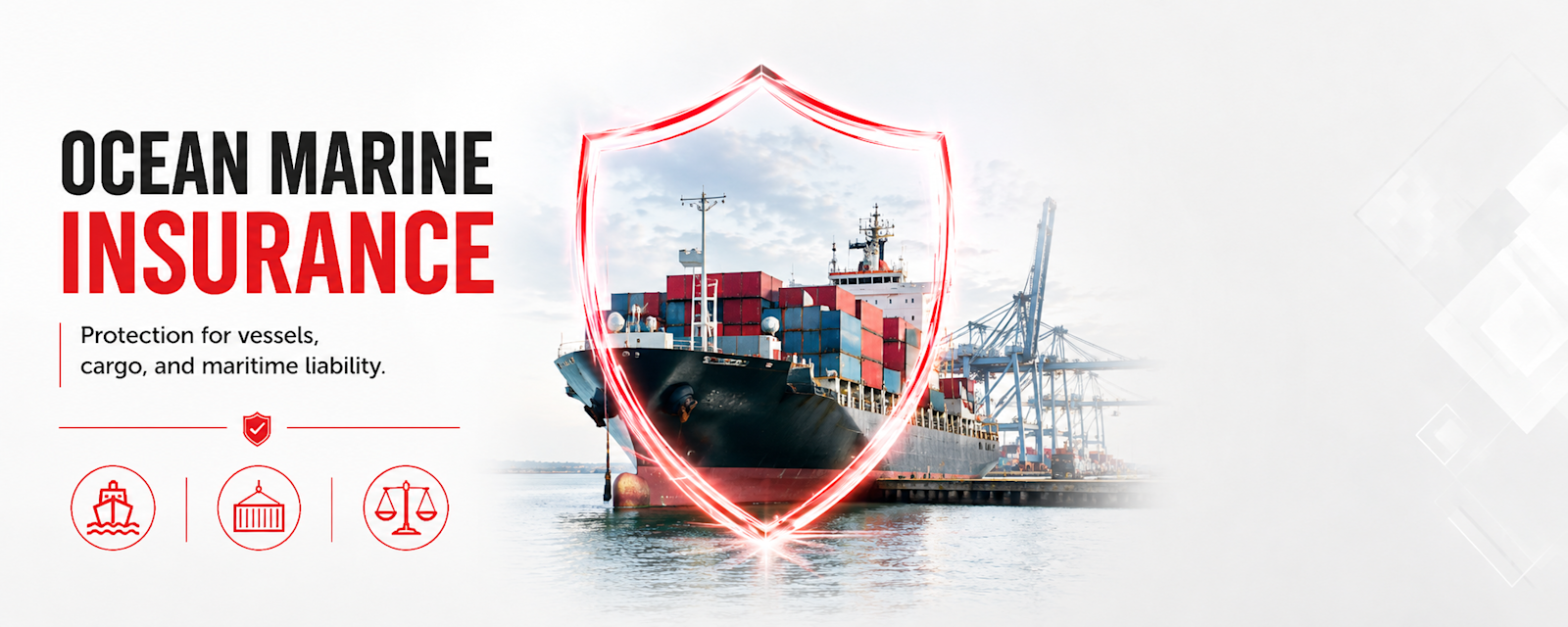
Ocean Marine Insurance is one of the oldest and most specialized areas of property and casualty insurance. It was created to help protect businesses involved in waterborne commerce, vessel operations, cargo transportation, and marine-related liability exposures.
Today, Ocean Marine Insurance can be important for importers, exporters, manufacturers, distributors, freight forwarders, marine service providers, shipyards, terminal operators, vessel owners, boat dealers, marine contractors, and businesses that depend on international shipping.
IRMI defines Ocean Marine Insurance as coverage for the transportation of goods or merchandise by vessels crossing foreign or domestic waters, including inland or aviation transit associated with the shipment. It may also include coverage for damage to vessels and legal liability arising during shipment.
At Capital Edge Firm, we help business owners understand whether their commercial insurance program properly protects cargo, vessels, marine operations, and liability exposures connected to shipping or water-based business activities.
What Is Ocean Marine Insurance?
Ocean Marine Insurance is a specialized type of insurance designed to protect property, cargo, vessels, and liability exposures related to marine transportation and marine business operations.
This coverage may apply to:
Goods shipped overseas
Cargo transported by vessel
Vessels and their machinery
Marine terminal operations
Shipyards and repair operations
Boat dealers
Marine contractors
Importers and exporters
Freight forwarders
Marine service providers
Liability arising from vessel ownership or marine operations
The Insurance Information Institute explains that businesses especially exposed to maritime risk include marine service providers, marine transportation providers, and businesses dependent on overseas shipping, such as commodities traders, freight forwarders, importers, exporters, and manufacturers.
Ocean Marine vs. Inland Marine
Ocean Marine and Inland Marine are related, but they are not the same.
Ocean Marine Insurance generally focuses on goods transported over water, vessels, and marine liability connected to shipping and maritime operations. Inland Marine Insurance usually focuses on property transported over land, property in transit, tools and equipment, installation floaters, and movable business property away from the main premises.
Triple-I explains that marine insurance can cover products transported over water, while inland marine insurance is used when products, materials, or equipment are transported over land or temporarily warehoused by a third party.
This distinction matters because a business may need both. For example, an importer may need Ocean Marine Cargo coverage while goods are crossing the ocean, then Inland Marine or transit coverage once the goods continue by truck or rail.
Cargo Insurance
Cargo Insurance is one of the most common Ocean Marine coverages. It helps protect goods while they are transported over water or as part of an international shipment.
Triple-I describes Cargo Insurance as coverage for product losses when products are transported overseas or warehoused before or after overseas transport.
Cargo coverage may be important for:
Importers
Exporters
Manufacturers
Wholesalers
Distributors
Retailers relying on overseas inventory
Freight forwarders
Businesses shipping high-value goods
Companies using international suppliers
Cargo can be exposed to many risks, including sinking, fire, theft, rough handling, water damage, collision, piracy, port delays, and damage during loading or unloading.
Hull and Machinery Coverage
Hull and Machinery coverage, often called H&M, helps protect the vessel itself.
Triple-I describes Hull and Machinery Insurance as coverage for damage to a vessel’s hull, machinery, and equipment caused by collisions and other ocean perils.
This coverage may be important for:
Vessel owners
Commercial fishing operations
Tug and barge operators
Marine transportation businesses
Charter operations
Workboat operators
Passenger vessel operators
Marine contractors
Boat rental businesses
A vessel can be one of the most valuable assets of a marine business. Damage to the hull, engine, navigation systems, machinery, or equipment can create major repair costs and interrupt operations.
Protection and Indemnity Insurance
Protection and Indemnity Insurance, commonly called P&I, is a marine liability coverage often connected with vessel operations.
Triple-I explains that P&I is often offered with marine hull insurance and may cover ship owners against liabilities for property damage and bodily injury.
P&I may respond to certain liability claims involving:
Bodily injury
Property damage
Crew-related liabilities
Damage to docks or piers
Collision-related liabilities
Wreck removal, depending on policy terms
Certain legal defense costs
P&I is not the same as Hull coverage. Hull protects the vessel. P&I helps protect against covered liability claims arising from vessel operations.
Marine Liability Insurance
Marine Liability Insurance is broader business liability coverage for marine-related operations.
Triple-I describes Marine Liability Insurance as business liability coverage for specific marine businesses such as boat dealers, rental companies, shipbuilders, terminal operators, and others.
This type of coverage may be important for:
Marinas
Boat dealers
Shipyards
Terminal operators
Stevedores
Marine repair businesses
Boat rental companies
Marine contractors
Dock and pier operators
Charter operations
Standard Commercial General Liability may not properly address specialized marine exposures. Marine businesses should review whether their liability coverage matches their actual operations.
Marine Pollution Insurance
Marine Pollution Insurance can help address pollution-related costs arising from marine operations, depending on policy terms.
Triple-I identifies Marine Pollution Insurance as coverage for costs associated with pollution from fuel spills and other events, and notes that some pollution coverage may be added to a general marine liability policy.
Pollution exposure can be significant for marine businesses because fuel, oil, chemicals, waste, and other pollutants can create cleanup costs, regulatory issues, and third-party claims.
Bumbershoot Coverage
Bumbershoot coverage is a specialized umbrella-style liability policy for marine risks.
Triple-I explains that shipyards, terminals, and other marine facilities often purchase specialized Bumbershoot policies that provide umbrella coverage for a range of risks, including liability, collision, and salvage costs.
This may be useful when a marine business needs higher limits than the primary policies provide. It may also help satisfy contract requirements from ports, clients, lenders, vendors, or business partners.
Who Should Consider Ocean Marine Insurance?
Ocean Marine Insurance may be important for businesses such as:
Importers
Exporters
Freight forwarders
Manufacturers using overseas suppliers
Wholesalers and distributors
Cargo owners
Marine transportation companies
Vessel owners
Boat dealers
Marinas
Shipyards
Marine contractors
Terminal operators
Stevedores
Commercial fishing operations
Passenger vessel operators
Businesses with overseas shipments
A company does not need to own a ship to need Ocean Marine Insurance. If the business owns cargo, depends on international shipments, or has marine-related liability exposure, this coverage should be reviewed.
Ocean Marine Insurance and Contracts
Contracts often determine who is responsible for goods during shipping. A business should understand whether it is responsible before, during, or after transit.
Important contract questions include:
Who owns the goods during shipment?
When does title transfer?
Who pays for insurance?
Who is responsible if cargo is damaged?
Are Incoterms being used?
Is the shipment domestic or international?
Is warehouse-to-warehouse coverage needed?
Are carriers, freight forwarders, or logistics companies involved?
Insurance should match the actual contractual responsibility. A business may believe the seller, buyer, carrier, or freight forwarder is responsible, but the contract may say otherwise.
Ocean Marine and Import/Export Businesses
Importers and exporters should review Ocean Marine Insurance carefully because cargo can pass through several stages before reaching its final destination.
A shipment may involve:
Supplier warehouse
Truck transport to port
Loading onto vessel
Ocean voyage
Unloading at destination port
Temporary storage
Truck or rail transport to final destination
Coverage may need to address the entire transit chain. If a policy only covers one stage, the business may have a gap.
Ocean Marine and Business Income
Cargo damage or vessel damage can interrupt business operations. A shipment delay may affect sales, inventory availability, production schedules, customer contracts, or seasonal demand.
Business owners should ask whether their marine program includes coverage for:
Delay-related losses
Extra expense
Contingent business interruption
Spoilage or temperature-sensitive goods
Expediting expenses
Loss of income from vessel damage
Contract penalties
Not all Ocean Marine policies include these protections automatically.
Common Exclusions and Limitations
Ocean Marine Insurance can be broad, but it does not cover everything.
Triple-I notes that marine policies include limitations and that exclusions may include war or military action, riots or civil strife, mold, mildew, dampness, general wear and tear, weathering, and marine life.
Other limitations may involve:
Improper packing
Inherent vice
Delay
Poor documentation
Unauthorized routes
Unseaworthy vessels
Certain high-risk territories
Certain types of cargo
Losses outside the covered transit period
War, strikes, piracy, or political risk unless endorsed
Businesses should review exclusions before a shipment begins, not after a loss occurs.
War Risk, Strikes, and Piracy
Some marine risks require special coverage. Triple-I notes that specific war risk insurance may be available for marine and aviation businesses, and that piracy may be insured under war risks coverage or sometimes through Hull and Machinery coverage.
Businesses involved in international shipping should pay attention to routes, ports, geopolitical risks, and cargo type. Coverage may need to be adjusted for high-risk voyages or regions.
Florida Law Supplement Consideration
For the Florida-specific angle, Ocean Marine is often treated differently from Inland Marine under Florida insurance law. The Florida Administrative Code provision hosted by Cornell Law notes that section 627.021(2)(c), Florida Statutes, states that Chapter 627 does not apply to Ocean Marine Insurance as distinguished from Inland Marine Insurance.
This does not mean Ocean Marine coverage is unimportant. It means the regulatory treatment can be different, and businesses should work with a licensed professional who understands marine insurance placement, admitted versus surplus lines considerations, policy wording, and contract requirements.
Common Mistakes Business Owners Make
Common mistakes include:
Assuming Commercial Property covers overseas cargo
Assuming Inland Marine covers ocean shipments
Assuming the freight forwarder is responsible for all cargo damage
Not reviewing Incoterms or shipping contracts
Not insuring goods warehouse-to-warehouse
Not understanding when title transfers
Not buying Hull coverage for owned vessels
Confusing Hull coverage with P&I liability
Ignoring marine pollution exposure
Carrying cargo limits that are too low
Not disclosing high-value or unusual cargo
Not reviewing war, piracy, or strike exclusions
Not reviewing coverage for temporary storage
Waiting until after a loss to check the policy
Final Checklist Before Buying Ocean Marine Insurance
Before purchasing or renewing Ocean Marine Insurance, ask:
Does my business import, export, or ship goods overseas?
Do we own cargo during transit?
Who is responsible under the contract?
Are Incoterms clearly understood?
Do we need Cargo Insurance?
Do we need warehouse-to-warehouse coverage?
Do we own or operate vessels?
Do we need Hull and Machinery coverage?
Do we need Protection and Indemnity coverage?
Do we have marine liability exposure?
Is marine pollution coverage needed?
Do we need Bumbershoot coverage?
Are war, piracy, or strike risks covered?
Are high-value goods properly declared?
Are temperature-sensitive goods covered?
Are ports, routes, and storage locations covered?
Are coverage limits enough?
Does the policy match the actual shipping contract?
Speak With a Marine Insurance Professional
Ocean Marine Insurance is specialized. A standard business insurance policy may not properly protect cargo, vessels, marine operations, or international shipping exposures.
At Capital Edge Firm, we help business owners identify coverage gaps, understand policy options, and review whether Ocean Marine Insurance should be part of their business protection plan. Whether you are importing goods, exporting products, operating marine equipment, managing cargo, or running a marine-related business, the right insurance review can help protect your operations with confidence.
Capital Edge Firm
Insurance • Accounting • Taxes • Medical Billing • Notary Public
1700 SW 57th Ave, Ste 204, Miami, FL 33155
Phone: +1 954-899-0896
Website: capitaledgefirm.com
Disclaimer: This article is for general educational purposes only and does not replace the terms, conditions, exclusions, endorsements, warranties, or limits of any specific insurance policy. Ocean Marine Insurance coverage varies by insurer, policy form, cargo type, vessel type, shipping route, contract terms, port exposure, storage conditions, underwriting eligibility, and applicable law. Always review your policy documents and speak with a licensed insurance professional before making coverage decisions.