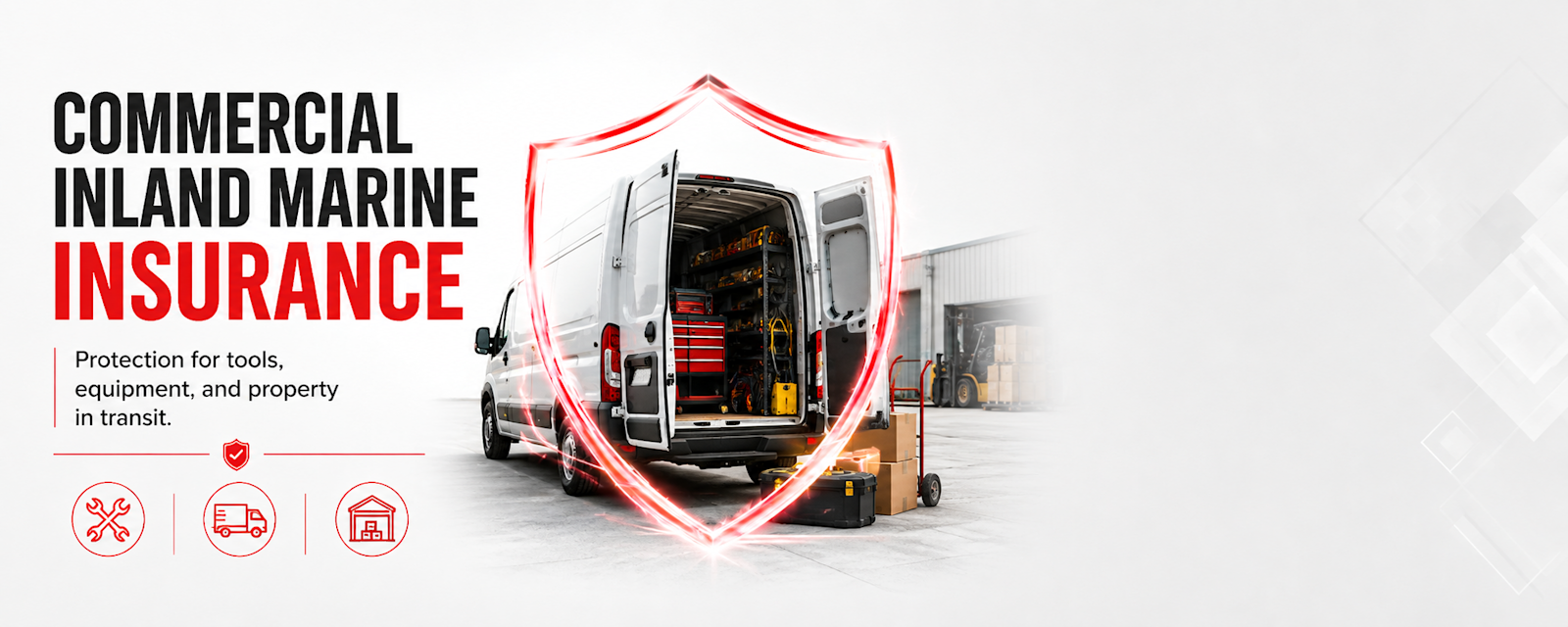
Many business owners protect their building, office, store, or warehouse with Commercial Property Insurance. But what happens when business property leaves that location?
What if tools are stolen from a job site? What if equipment is damaged while being transported? What if materials are temporarily stored away from the main office? What if a business is responsible for customer property in its care? What if expensive equipment moves from one location to another every week?
That is where Commercial Inland Marine Insurance becomes important.
Commercial Inland Marine Insurance is designed to protect certain types of business property that move, travel, or do not remain at one fixed location. The NAIC defines inland marine as coverage for property that may be in transit, held by a bailee, located at a fixed location, or movable goods often located in different places, such as off-road construction equipment.
At Capital Edge Firm, we help business owners understand whether their current property insurance protects the items they rely on every day, especially when those items leave the main business premises.
What Is Commercial Inland Marine Insurance?
Commercial Inland Marine Insurance is a type of property insurance that helps cover movable business property, property in transit, property temporarily stored away from the main location, or property in the care, custody, or control of another party.
The Insurance Information Institute explains that inland marine insurance covers products, materials, and equipment transported over land, such as by truck or train, or while temporarily warehoused by a third party.
Despite the word “marine,” this coverage is not only about boats or ocean shipping. The name comes from the historical development of marine insurance, but modern inland marine is commonly used for business property that moves over land or is used away from a fixed premises.
Why Standard Commercial Property Insurance May Not Be Enough
A Commercial Property policy often focuses on property located at the insured premises. That may include the building, business personal property, inventory, furniture, equipment, and fixtures at the address listed on the policy.
But many businesses do not operate from only one fixed location. Contractors carry tools to job sites. Installers transport materials. Photographers move cameras and lighting equipment. Medical suppliers transport equipment. Landscapers move machinery. Businesses ship inventory. Property managers may handle property owned by others.
If the property is away from the main insured location, in transit, at a temporary job site, or in someone else’s custody, the business may need Commercial Inland Marine coverage to close the gap.
Who May Need Commercial Inland Marine Insurance?
Commercial Inland Marine Insurance may be important for:
Contractors
Electricians
Plumbers
HVAC companies
Landscapers
Roofers
Painters
Carpenters
Flooring installers
Cleaning companies
Photographers and videographers
Event businesses
Medical equipment providers
Mobile service businesses
Delivery businesses
Distributors and wholesalers
Property managers
Warehouses and storage businesses
Businesses that transport equipment, materials, tools, inventory, or customer property
The key question is simple: Does your business property move, travel, or leave your main location? If the answer is yes, Inland Marine coverage should be reviewed.
Property in Transit
Property in Transit coverage may help protect business property while it is being transported from one place to another.
This can include property transported by:
Company vehicles
Employee vehicles
Trucks
Vans
Trailers
Common carriers
Third-party transporters, depending on the policy
Examples include materials being moved to a job site, equipment being delivered to a client location, inventory being shipped between locations, or business property being transported to an event.
A common mistake is assuming that Commercial Auto Insurance covers the property inside the vehicle. Commercial Auto may cover liability and physical damage to the vehicle, but it does not automatically cover the tools, inventory, materials, or customer property being transported.
Tools and Equipment Coverage
Tools and Equipment Coverage is one of the most common Inland Marine needs for contractors and service businesses.
This coverage may help protect business tools and equipment that are used away from the main premises. Examples may include:
Power tools
Hand tools
Compressors
Ladders
Generators
Surveying equipment
Landscaping tools
Cleaning equipment
Portable machinery
Diagnostic tools
Specialty equipment
For many small businesses, tools are the heart of the operation. If tools are stolen from a truck or job site, the business may not be able to operate. Inland Marine coverage can help reduce that financial interruption.
Contractors Equipment Coverage
Contractors Equipment Coverage is designed for larger or specialized equipment used by contractors and construction-related businesses.
This may include:
Excavators
Skid steers
Forklifts
Trenchers
Backhoes
Compressors
Generators
Scaffolding
Construction machinery
Mobile equipment
This coverage can apply while equipment is at job sites, in transit, temporarily stored, or used across multiple locations, depending on the policy.
Installation Floater
An Installation Floater can help protect materials, supplies, fixtures, or equipment that will be installed as part of a project.
This can be important for:
Contractors
HVAC companies
Flooring installers
Cabinet installers
Electrical contractors
Plumbing contractors
Solar installers
Sign installers
Technology installers
For example, if materials are delivered to a job site before installation and are stolen or damaged, an installation floater may help cover the loss, subject to policy terms.
The NAIC’s inland marine model language includes builders risk or installation risk coverage for machinery, equipment, building materials, or supplies being used in installation, testing, building, renovating, or repairing, including property at work sites, in transit, or temporarily stored.
Builders Risk
Builders Risk is often associated with Inland Marine because it protects buildings or structures during construction or renovation.
A Builders Risk policy may help cover property under construction, building materials, temporary structures, and certain property at the job site, depending on the policy.
This can be important for:
New construction
Major renovations
Remodeling projects
Commercial buildouts
Tenant improvements
Property owners
Developers
General contractors
Builders Risk should be carefully reviewed because coverage can vary based on who owns the materials, when coverage begins, when coverage ends, whether soft costs are included, and whether flood, wind, theft, or testing are covered.
Bailee Coverage
Bailee Coverage may help protect property that belongs to others while it is in the insured business’s care, custody, or control.
This can be important for:
Dry cleaners
Repair shops
Storage businesses
Warehouses
Computer repair businesses
Jewelry repair shops
Furniture repair businesses
Auto service operations
Cleaning companies
Property managers
Businesses handling client equipment or property
A standard property policy may protect the business’s own property, but not necessarily customer property. If your business holds or works on property belonging to someone else, Bailee coverage should be reviewed carefully.
Electronic Data Processing Equipment
Electronic Data Processing, or EDP coverage, may help protect certain computer equipment, media, and data processing property.
This can be relevant for businesses that depend on:
Servers
Computers
Specialized hardware
Medical billing systems
Accounting systems
Point-of-sale systems
IT equipment
Communication systems
Businesses should remember that EDP coverage is not the same as Cyber Liability. EDP may focus more on physical equipment or data processing property, while Cyber Liability may address data breaches, ransomware, privacy claims, cyber extortion, and digital incident response.
Valuable Papers and Records
Valuable Papers and Records coverage may help protect important documents, records, files, and similar business property.
This can matter for:
Accounting firms
Law offices
Medical offices
Insurance agencies
Property managers
Real estate offices
Contractors with project documents
Professional service businesses
Even in a digital world, many businesses still rely on physical files, signed forms, permits, plans, client records, contracts, or financial documents.
Fine Arts and Exhibition Coverage
Inland Marine coverage can also apply to fine arts, exhibitions, and high-value scheduled property.
The NAIC glossary includes scheduled property and items with antique or collector’s value within inland marine examples.
This may be important for galleries, collectors, museums, interior designers, event businesses, or companies that display or transport valuable property.
Commercial Inland Marine vs. Commercial Auto
Commercial Auto Insurance and Commercial Inland Marine Insurance solve different problems.
Commercial Auto may cover:
Liability from vehicle accidents
Physical damage to the vehicle
Certain medical or injury-related coverage
Hired and non-owned auto, if included
Commercial Inland Marine may cover:
Tools inside the vehicle
Equipment transported to job sites
Materials in transit
Customer property
Installation materials
Contractors equipment
Other movable property
A business that owns a work van may need both. The auto policy may protect the van, while the Inland Marine policy may protect the tools and equipment inside the van.
Commercial Inland Marine vs. Cargo Insurance
Inland Marine can include property in transit, but businesses transporting goods for others may need specific cargo coverage.
For example, a trucking company hauling freight may need Motor Truck Cargo Insurance. A contractor moving tools may need Tools and Equipment coverage. A distributor transporting its own inventory may need Property in Transit coverage.
The correct coverage depends on:
Who owns the property
Who is responsible for it
How it is transported
Where it is stored
Whether the business is hauling goods for others
Whether the property is scheduled or blanket-covered
What Commercial Inland Marine Insurance May Not Cover
Commercial Inland Marine can be flexible, but it does not cover everything.
Common exclusions or limitations may include:
Wear and tear
Mechanical breakdown
Gradual deterioration
Rust or corrosion
Intentional acts
Dishonest acts by employees, unless crime coverage applies
Mysterious disappearance, unless included
Property not listed or scheduled, depending on the form
Improper packing
Faulty workmanship
War or nuclear hazard
Government seizure
Flood or earthquake, unless included
Property outside the covered territory
Vehicles themselves, which may need Commercial Auto
Cargo of others, unless the correct form is used
Every policy must be reviewed carefully because Inland Marine forms vary widely by insurer and business type.
Limits, Deductibles, and Scheduling Property
Business owners should review whether property is covered on a scheduled basis or blanket basis.
A scheduled policy lists specific items, often with individual values. This may be useful for high-value equipment.
A blanket policy may provide a total limit for a category of property, such as tools and equipment.
Important items to review include:
Total property limit
Per-item limit
Per-occurrence limit
Deductible
Valuation method
Replacement cost vs. actual cash value
Newly acquired property limit
Temporary storage limit
Transit limit
Job site limit
Theft limitations
Unattended vehicle exclusions
Security requirements
Covered territory
A low premium may come with limits or exclusions that do not match the real value of your business property.
Florida Commercial Insurance Notice Considerations
Commercial Inland Marine may be written as a standalone policy, part of a Commercial Package Policy, or added by endorsement. For certain Florida commercial property and casualty policies, Florida Statute 627.4133 includes notice rules for cancellation, nonrenewal, and renewal premium, with timelines that vary by policy type and reason for cancellation.
Business owners should never ignore cancellation, nonrenewal, renewal, underwriting, inspection, audit, or premium finance notices. If Inland Marine coverage lapses, the business may discover the gap only after tools, equipment, materials, or customer property are damaged or stolen.
Common Mistakes Business Owners Make
Common mistakes include:
Assuming Commercial Property covers property everywhere
Assuming Commercial Auto covers tools inside the vehicle
Not insuring tools and equipment at job sites
Not covering property in transit
Not covering customer property
Not updating the equipment schedule
Underinsuring high-value tools or machinery
Not reviewing theft exclusions
Ignoring unattended vehicle conditions
Not covering leased or rented equipment
Assuming cargo is covered
Not adding installation floater coverage
Not reviewing valuation terms
Choosing a low limit to save premium
When Should a Business Review Inland Marine Coverage?
A business should review Commercial Inland Marine Insurance when:
Tools or equipment leave the office
Employees work at job sites
Materials are delivered before installation
Business property is transported
Customer property is in the business’s care
Equipment is stored temporarily
The business buys expensive tools or machinery
The business rents or leases equipment
The business expands service areas
The business begins delivery or mobile operations
A contract requires specific property coverage
The business experiences theft or equipment loss
The owner is unsure whether property is covered away from the premises
Final Checklist Before Buying Commercial Inland Marine Insurance
Before purchasing or renewing Commercial Inland Marine Insurance, ask:
What business property leaves my main location?
Are tools and equipment covered off premises?
Is property in transit covered?
Are job site materials covered?
Do I need an installation floater?
Do I need builders risk?
Is customer property covered?
Are leased or rented items covered?
Are high-value items scheduled?
Is there a blanket limit?
What is the per-item limit?
Is theft from unattended vehicles covered?
What security requirements apply?
Is coverage replacement cost or actual cash value?
Are flood, wind, or earthquake excluded?
Is cargo of others covered?
Does the policy match my actual business operations?
Are all locations, job sites, and transit exposures addressed?
Speak With a Business Insurance Professional
Commercial Inland Marine Insurance can be one of the most important coverages for a business that moves, transports, installs, stores, or handles property away from the main business location.
A standard property policy may not be enough. Commercial Auto may not protect the equipment inside the vehicle. General Liability may not cover the business’s own property. That is why Inland Marine coverage can be essential for contractors, service businesses, installers, mobile operations, and companies that handle property in transit or property of others.
At Capital Edge Firm, we help business owners review their commercial insurance program, identify property coverage gaps, and protect the tools, equipment, materials, and property that keep the business running.
Capital Edge Firm
Insurance • Accounting • Taxes • Medical Billing • Notary Public
1700 SW 57th Ave, Ste 204, Miami, FL 33155
Phone: +1 954-899-0896
Website: capitaledgefirm.com
Disclaimer: This article is for general educational purposes only and does not replace the terms, conditions, exclusions, endorsements, or limits of any specific insurance policy. Coverage varies by insurer, policy form, underwriting eligibility, property type, business operations, storage, transit, job site exposure, location, and applicable law. Always review your policy documents and speak with a licensed insurance professional before making coverage decisions.