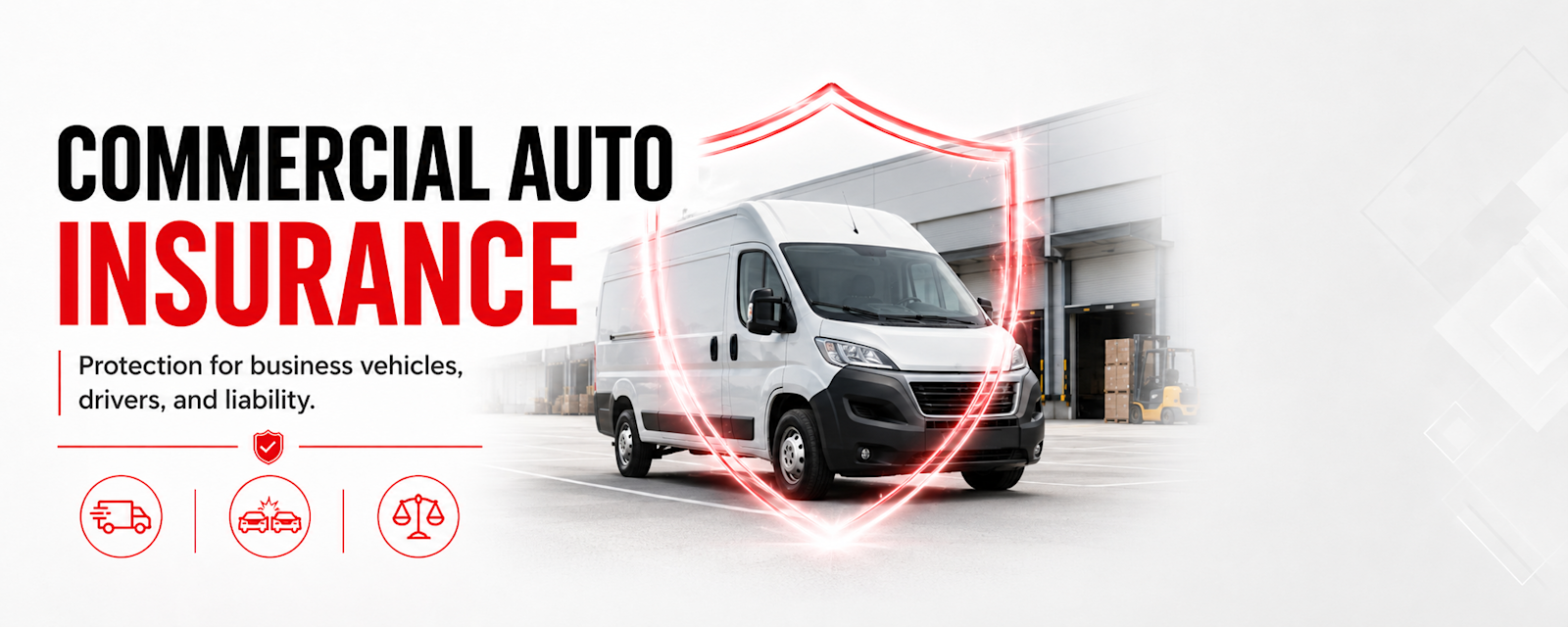
Vehicles are essential for many businesses. A contractor may use a pickup truck to visit job sites. A cleaning company may send employees to client locations. A restaurant may offer delivery. A medical office may have staff driving for business errands. A real estate professional may drive to appointments. A company may own vans, trucks, or service vehicles.
When a vehicle is used for business, a personal auto policy may not be enough. That is where Commercial Auto Insurance becomes important.
Commercial Auto Insurance is designed to help protect businesses from financial losses involving vehicles used in business operations. The Florida Office of Insurance Regulation describes Commercial Automobile Liability as coverage for liability involving bodily injury or property damage, medical payments, and other coverages not involving damage to the vehicle itself. It also describes Commercial Auto Physical Damage as coverage involving damage to the vehicle itself, such as comprehensive and collision.
At Capital Edge Firm, we help business owners understand how commercial auto insurance works, when it may be required, and what coverages should be reviewed before choosing the lowest premium.
What Is Commercial Auto Insurance?
Commercial Auto Insurance is a policy designed for vehicles used in connection with a business, commercial activity, employment, or work performed for profit. It can help protect the business from covered auto-related losses involving owned vehicles, leased vehicles, rented vehicles, or sometimes vehicles the business does not own but uses for business purposes.
Depending on the policy, Commercial Auto Insurance may include:
Liability Coverage
Physical Damage Coverage
Medical Payments or PIP
Uninsured/Underinsured Motorist Coverage
Hired Auto Coverage
Non-Owned Auto Coverage
Rental Reimbursement
Towing
Drive Other Car Coverage
Additional insured or waiver endorsements, when required by contract
The correct policy depends on how the vehicles are titled, who drives them, what they are used for, where they operate, what they transport, and whether the business has employees or subcontractors driving.
Why Personal Auto Insurance May Not Be Enough
One of the biggest mistakes business owners make is assuming that a personal auto policy covers business use.
A personal auto policy may be designed for personal driving, commuting, and household use. If a vehicle is regularly used for deliveries, transporting tools, visiting job sites, carrying equipment, hauling goods, or performing services for clients, the insurer may consider that business use.
Examples of business vehicle use may include:
A contractor driving to job sites
A cleaning company visiting client homes
A restaurant delivering food
A consultant driving to client meetings
A salesperson visiting prospects
An employee using a personal car for company errands
A business renting a van or truck for a project
A company-owned vehicle used by employees
When business use is not properly disclosed, a claim can become complicated. The business may also be exposed to lawsuits, contract violations, or uncovered losses.
Who May Need Commercial Auto Insurance?
Commercial Auto Insurance may be important for:
Contractors
Delivery businesses
Cleaning companies
Landscaping companies
Restaurants and food service businesses
Mobile notaries
Real estate businesses
Medical offices
Home health agencies
Consultants
Retail businesses with delivery
Wholesalers and distributors
Service companies
Businesses with company-owned vehicles
Businesses whose employees drive for work
Even if the business does not own vehicles, it may still need Hired and Non-Owned Auto coverage if employees rent vehicles or use their personal vehicles for business purposes.
Coverage 1: Commercial Auto Liability
Commercial Auto Liability is one of the most important parts of the policy. It may help protect the business if a covered driver causes bodily injury or property damage to others while using a covered auto.
Liability claims may involve:
Injury to another driver
Injury to passengers
Damage to another vehicle
Damage to a building, fence, sign, or other property
Legal defense costs
Settlements or judgments, subject to policy limits
A serious accident can exceed minimum limits quickly. Business owners should consider the size of the vehicle, driving radius, frequency of use, driver history, contracts, and possible lawsuit exposure when choosing limits.
Coverage 2: Physical Damage Coverage
Physical Damage Coverage helps protect the business vehicle itself. This is different from liability coverage.
Physical damage may include:
Collision Coverage
Comprehensive Coverage
Specified Causes of Loss, depending on the policy
The NAIC describes Auto Physical Damage as coverage that insures against material damage to the insured’s vehicle, including causes such as collision, vandalism, fire, and theft.
Collision Coverage
Collision Coverage may help pay to repair or replace a covered business vehicle if it is damaged in a collision with another vehicle or object, or if the vehicle overturns.
This coverage is especially important when:
The vehicle is financed
The vehicle is leased
The business cannot afford to replace it out of pocket
The vehicle is essential to daily operations
The vehicle carries tools, equipment, or inventory
A loss would interrupt business income
Rejecting collision may lower premium, but it can create a major problem if the business depends on that vehicle.
Comprehensive Coverage
Comprehensive Coverage, also called Other Than Collision, may help cover losses caused by events such as theft, vandalism, fire, windstorm, hail, falling objects, flood, or animal impact, depending on the policy.
This coverage can be very important for vehicles parked overnight, vehicles carrying valuable equipment, vehicles used in storm-prone areas, or vehicles that would be expensive to replace.
PIP, Medical Payments, and Injury Coverage
In Florida, vehicles registered in the state must generally show proof of Personal Injury Protection (PIP) and Property Damage Liability (PDL) before registration. FLHSMV states that PIP covers 80% of necessary and reasonable medical expenses up to $10,000 from a covered injury, regardless of who caused the crash, and PDL pays for damage to another person’s property caused by the insured vehicle.
Commercial auto policies may also include medical payments or other injury-related coverage depending on the state, policy form, and vehicle type. Requirements vary, so business owners should not assume one rule applies to every vehicle or operation.
Uninsured and Underinsured Motorist Coverage
Uninsured/Underinsured Motorist Coverage, often called UM/UIM, may help protect covered persons if they are injured by a driver who has no insurance or does not have enough insurance.
This coverage can be important for businesses because employees may spend significant time on the road. If another driver causes an accident and has little or no bodily injury coverage, UM/UIM may help fill a serious gap.
Before rejecting UM/UIM, business owners should ask:
How often do employees drive?
Do employees transport passengers?
Could an employee injury affect business operations?
Are vehicles used in high-traffic areas?
Would the business want additional protection beyond the other driver’s insurance?
Hired Auto Coverage
Hired Auto Coverage may apply when the business rents, leases, hires, or borrows vehicles for business use.
Examples include:
Renting a van for a business event
Leasing a truck for a short-term project
Renting a car for a business trip
Borrowing a vehicle for business operations
A standard commercial auto policy may not automatically cover every hired auto exposure unless the correct coverage symbol or endorsement is included. This should be reviewed carefully.
Non-Owned Auto Coverage
Non-Owned Auto Coverage may apply when employees use their personal vehicles for business purposes.
Examples include:
An employee uses a personal car to make a bank deposit
A staff member drives to pick up office supplies
A manager visits a client using their own vehicle
A salesperson drives to appointments
An employee uses a personal vehicle for business errands
Travelers explains that hired and non-owned auto insurance may cover commercial auto liability damages such as settlements, judgments, attorney fees, and other court costs when employees operate vehicles for business.
This coverage is important because the employee’s personal auto policy may respond first, but the business can still be named in a lawsuit.
Commercial Auto Symbols Matter
Commercial auto policies often use coverage symbols to define which vehicles are covered for each coverage part. These symbols can determine whether coverage applies to any auto, owned autos, hired autos, non-owned autos, scheduled autos, or specific categories of vehicles.
Business owners should not assume every vehicle is covered simply because they have a commercial auto policy. The declarations page must be reviewed carefully.
Important questions include:
Are all owned vehicles listed?
Are newly acquired vehicles covered automatically?
Is hired auto included?
Is non-owned auto included?
Are trailers covered?
Are employees covered while driving?
Are personal vehicles used for business addressed?
Are coverage symbols correct for liability and physical damage?
Vehicle Type and Use Matter
Commercial auto underwriting depends heavily on vehicle type and use.
Insurers may ask about:
Vehicle year, make, model, and VIN
Gross vehicle weight
Radius of operation
Business use
Driver list
Driving records
Cargo or equipment transported
Towing exposure
Delivery exposure
Passenger transportation
For-hire operations
State and federal filings
Garaging location
Prior claims
A pickup truck used by a contractor is not the same risk as a delivery van, a box truck, a dump truck, a tow truck, a passenger van, or a vehicle transporting hazardous materials.
Florida Commercial Vehicle Requirements
Florida’s base auto insurance requirements generally include PIP and PDL for registered vehicles, but certain commercial vehicles may have additional liability requirements. Florida Statute 627.7415 establishes additional liability insurance coverage for commercial motor vehicles based on gross vehicle weight: $50,000 per occurrence for vehicles from 26,000 to under 35,000 pounds, $100,000 per occurrence for vehicles from 35,000 to under 44,000 pounds, and $300,000 per occurrence for vehicles 44,000 pounds or more.
Businesses operating buses, passenger transportation, interstate trucking, hazardous materials operations, or regulated motor carrier operations may face additional requirements. FMCSA states that it will not grant operating authority registration until the registrant has the required minimum levels of financial responsibility on file.
Because requirements can vary by vehicle, cargo, passengers, use, and operating territory, business owners should review their situation carefully with a licensed insurance professional.
What Commercial Auto Insurance May Not Cover
Commercial Auto Insurance can be broad, but it does not cover everything.
Common exclusions or limitations may include:
Intentional acts
Racing or stunt activities
Personal use not allowed by policy
Undisclosed drivers
Undisclosed vehicles
Wear and tear
Mechanical breakdown
Cargo, unless motor truck cargo coverage is added
Tools or equipment, unless covered elsewhere
Employee injuries, which may require workers’ compensation
Pollution liability, unless endorsed
Rideshare or delivery activities not disclosed
Vehicles used outside the covered territory
Contractual liability not accepted by the policy
This is why the policy should be matched to the real business operation.
Commercial Auto vs. Motor Truck Cargo
Commercial Auto Insurance generally protects liability and vehicle physical damage. It does not automatically protect the goods or cargo being transported.
If a business transports goods, equipment, customer property, or freight, it may need:
Motor Truck Cargo Insurance
Inland Marine Coverage
Installation Floater
Tools and Equipment Coverage
Bailee Coverage
Property of Others Coverage
For example, a delivery business may insure the van but still have no coverage for the customer’s property inside unless the right coverage is added.
Commercial Auto vs. Workers’ Compensation
If an employee is injured in a business vehicle accident, Commercial Auto may not be the only policy involved. Workers’ Compensation may apply to employee injuries arising out of employment.
This is important because auto liability protects against liability to others, while workers’ compensation protects employees for job-related injuries. A business with employees may need both coverages.
Common Mistakes Business Owners Make
Common mistakes include:
Using a personal auto policy for business driving
Not listing all business vehicles
Not disclosing delivery or jobsite use
Rejecting Hired and Non-Owned Auto coverage
Carrying liability limits that are too low
Not reviewing driver Motor Vehicle Reports
Not updating the policy after buying a vehicle
Assuming cargo is covered
Assuming tools and equipment inside the vehicle are covered
Not adding employees as covered drivers
Ignoring contract insurance requirements
Not checking radius of operation
Not reviewing state or federal filing needs
Choosing premium over protection
When Should a Business Review Its Commercial Auto Policy?
A business should review Commercial Auto Insurance when:
Buying or leasing a vehicle
Hiring employees who drive
Starting delivery operations
Expanding to new states
Signing a contract requiring auto liability
Renting or borrowing vehicles
Employees use personal cars for business
Adding trailers or equipment
Transporting goods or customer property
Changing garaging location
Expanding driving radius
Receiving a cancellation or nonrenewal notice
Experiencing claims or driver changes
Final Checklist Before Buying Commercial Auto Insurance
Before purchasing or renewing Commercial Auto Insurance, ask:
Are all business vehicles listed?
Are the correct coverage symbols used?
Is liability coverage enough?
Is PIP or medical coverage included where required?
Is UM/UIM included or rejected?
Is collision included?
Is comprehensive included?
Are deductibles affordable?
Is hired auto included?
Is non-owned auto included?
Are employee drivers properly listed?
Are personal vehicles used for business addressed?
Is cargo or customer property covered separately?
Are tools and equipment covered?
Are trailers covered?
Are state or federal filings required?
Does the policy meet contract requirements?
Does the policy match the real use of the vehicles?
Speak With a Commercial Auto Insurance Professional
Commercial Auto Insurance is not just for trucking companies. Any business that owns, leases, rents, borrows, or uses vehicles for work may have commercial auto exposure.
The right policy can help protect your vehicles, employees, finances, contracts, and operations. The wrong policy may leave your business exposed after an accident, especially if the vehicle use was not properly disclosed.
At Capital Edge Firm, we help business owners review commercial auto insurance options, understand coverage gaps, and choose protection based on real business use — not just the lowest premium.
Capital Edge Firm
Insurance • Accounting • Taxes • Medical Billing • Notary Public
1700 SW 57th Ave, Ste 204, Miami, FL 33155
Phone: +1 954-899-0896
Website: capitaledgefirm.com
Disclaimer: This article is for general educational purposes only and does not replace the terms, conditions, exclusions, endorsements, or limits of any specific insurance policy. Commercial auto insurance requirements vary by state, vehicle type, business use, weight, passenger capacity, cargo, operating radius, filings, underwriting eligibility, and applicable law. Always review your policy documents and speak with a licensed insurance professional before making coverage decisions.