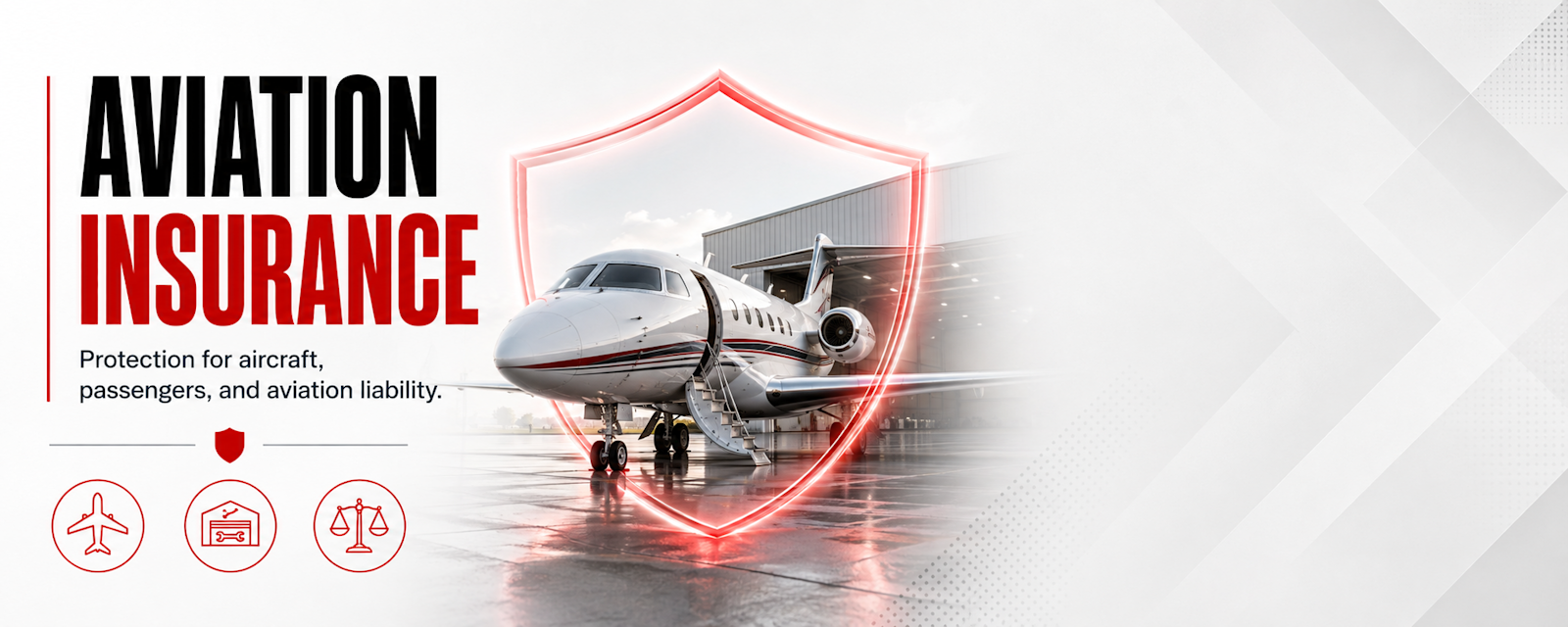
Aviation Insurance is a specialized area of property and casualty insurance designed for aircraft owners, pilots, aviation businesses, airport operators, hangar owners, flight schools, charter operators, repair facilities, and businesses that use aircraft as part of their operations.
Aircraft create risks that are very different from cars, trucks, buildings, tools, inventory, or standard business premises. A single aviation accident can involve the aircraft itself, passengers, people on the ground, other aircraft, hangars, airport property, cargo, business interruption, regulatory concerns, and lawsuits.
That is why Aviation Insurance is usually handled through specialized policy forms and markets.
IRMI explains that businesses using private aircraft in their operations generally need specialty coverage because claims arising out of aircraft ownership, maintenance, or use are usually excluded under standard Commercial General Liability forms. IRMI also notes that aircraft policies often include aircraft liability, hull physical damage, and medical payments coverage, and that aircraft policies are not standardized and can vary widely.
At Capital Edge Firm, we help business owners understand specialized insurance exposures and identify whether their current policies leave gaps related to aircraft use, aviation operations, or non-owned aircraft exposure.
What Is Aviation Insurance?
Aviation Insurance is insurance designed to protect against certain losses related to aircraft ownership, aircraft operation, aircraft maintenance, aviation premises, passenger exposure, and aviation-related liability.
Depending on the policy and operation, Aviation Insurance may include:
Aircraft Liability
Aircraft Hull Coverage
Passenger Liability
Medical Payments
Non-Owned Aircraft Liability
Airport Liability
Hangarkeepers Liability
Aircraft Products Liability
Premises Liability for aviation businesses
Ground Risk Hull Coverage
In-Flight Coverage
War Risk or other specialty aviation endorsements
Drone or unmanned aircraft coverage, when applicable
The right coverage depends heavily on the aircraft, use, pilot experience, passenger exposure, ownership structure, business operation, airport requirements, lease agreements, lender requirements, and whether the aircraft is owned, rented, borrowed, chartered, or operated commercially.
Why Standard Business Insurance May Not Be Enough
Many business owners assume that their Commercial General Liability policy will protect them if something goes wrong with business-related aircraft use. That can be a dangerous assumption.
Standard business liability policies often exclude aircraft ownership, maintenance, or use. This means a business using aircraft for operations, executive travel, charter services, flight instruction, aerial work, or aviation-related services may need a dedicated Aviation Insurance policy or aviation endorsement.
This matters for companies that:
Own aircraft
Lease or finance aircraft
Rent aircraft
Charter aircraft
Use aircraft for business travel
Operate flight schools
Provide aircraft maintenance
Store aircraft in hangars
Operate airports or aviation facilities
Sell or service aircraft parts
Use drones or unmanned aircraft for business
The key question is not only “Do we own an aircraft?” The better question is: Does our business have any aircraft-related exposure?
Aircraft Liability Coverage
Aircraft Liability coverage may help protect the insured against covered claims involving bodily injury or property damage arising from the ownership, maintenance, or use of an insured aircraft.
The U.S. Government Accountability Office describes aviation liability insurance as coverage for death or bodily injury to passengers or persons on the ground, as well as property damage caused by an aircraft accident. It also notes that general aviation aircraft owners commonly purchase package policies that include aircraft hull and liability coverage.
Aircraft liability may apply to claims involving:
Injury to passengers
Injury to people on the ground
Damage to airport property
Damage to another aircraft
Damage to buildings, vehicles, or equipment
Legal defense costs
Settlements or judgments, subject to policy limits
Liability limits should be reviewed carefully. Aviation losses can become severe very quickly, especially when passengers, third parties, or expensive property are involved.
Passenger Liability
Passenger Liability may help protect against covered claims involving injury or death of passengers while entering, occupying, or exiting the aircraft.
This is especially important for:
Charter operators
Flight schools
Corporate aircraft
Aircraft used for business travel
Aircraft carrying clients, guests, executives, or employees
Passenger service operations
Some aviation liability policies include passenger liability within a combined single limit. Others may have sublimits per passenger. Business owners should review whether passenger liability is included, excluded, limited, or subject to specific conditions.
Aircraft Hull Coverage
Aircraft Hull Coverage protects the aircraft itself from covered physical damage. IRMI defines aircraft hull coverage as physical damage coverage for aircraft and explains that it can apply while the aircraft is in motion or not in motion, depending on the policy. It also notes that hull coverage may be written on a named-perils or open-perils basis and is usually subject to a deductible.
Hull coverage may help protect against:
Collision
Fire
Theft
Vandalism
Windstorm or hail
Ground damage
In-flight damage
Damage during taxiing
Damage while parked or stored
Damage during certain covered operations
Hull coverage is often written on a valued basis, meaning the value of the aircraft is agreed to at policy inception and listed in the declarations. If the aircraft is a total loss, the policy may pay the scheduled value, less applicable deductible, subject to policy terms.
Ground Risk Hull Coverage
Ground Risk Hull Coverage may cover the aircraft while it is on the ground. Some policies distinguish between:
Ground risk not in motion
Ground risk in motion
In-flight coverage
This distinction matters. An aircraft parked inside a hangar has a different risk than an aircraft taxiing on the runway, being towed, or flying.
Aircraft owners should not assume all physical damage situations are covered. The policy must be reviewed to confirm when hull coverage applies.
Medical Payments Coverage
Medical Payments coverage may help pay certain medical expenses for injured occupants, regardless of fault, subject to the policy limits and terms.
In aviation policies, medical payments may be included in some aircraft package policies, but the amount, eligible persons, and conditions vary widely. IRMI notes that aircraft policies often include medical payments coverage, but also emphasizes that aircraft policies are not standardized.
This is another reason aircraft owners and operators should avoid assuming that aviation policies work like auto policies.
Non-Owned Aircraft Liability
Non-Owned Aircraft Liability is important when a business or individual uses an aircraft they do not own.
Examples include:
A business executive rents an aircraft
A company charters aircraft for business travel
A pilot rents an aircraft from a flight school
A business uses a borrowed aircraft
Employees use aircraft in connection with company business
A company has occasional aircraft exposure but does not own a plane
Non-Owned Aircraft Liability may help protect the business or individual if they become legally responsible for covered claims involving a non-owned aircraft. This coverage can be especially important because the aircraft owner’s policy may not fully protect the person or business using the aircraft.
Hangarkeepers Liability
Hangarkeepers Liability may help protect businesses that store, service, repair, or maintain aircraft belonging to others.
This coverage can be important for:
Hangar operators
Aircraft repair shops
Fixed-base operators, also known as FBOs
Maintenance providers
Aircraft storage facilities
Airports with aircraft storage exposure
If a customer’s aircraft is damaged while in the business’s care, custody, or control, standard General Liability may not be enough. Hangarkeepers Liability is designed for this type of aviation-specific exposure.
Airport Liability
Airport Liability may help protect airport owners or operators from covered claims related to airport premises and operations.
This may involve:
Bodily injury on airport premises
Property damage related to airport operations
Runway or taxiway exposures
Airport maintenance operations
Premises liability
Certain aviation-related operational hazards
Airport liability is specialized because airport operations involve risks not normally found in a standard commercial premises policy.
Aircraft Products Liability
Aircraft Products Liability may apply to businesses that manufacture, sell, distribute, service, or repair aircraft parts, components, systems, or aviation-related products.
This can be important for:
Aircraft parts manufacturers
Aircraft maintenance companies
Repair stations
Distributors of aviation components
Avionics companies
Aerospace product suppliers
If a defective product or faulty repair allegedly contributes to an aviation loss, the liability exposure can be significant.
Special Aviation Coverages
Special aviation coverages may vary by insurer and operation, but can include:
War Risk Coverage
Airport Liability
Hangarkeepers Liability
Aircraft Products Liability
Non-Owned Aircraft Liability
Excess Aviation Liability
Premises Liability for aviation operations
Drone or unmanned aircraft coverage
Spare parts coverage
Crew coverage
Cargo or baggage liability
Charter operator coverage
Flight school coverage
Aerial application coverage
Aircraft rental or instruction coverage
The Florida insurance examination outline specifically identifies Aviation Insurance as including aircraft policies and special aviation coverages.
Federal and Commercial Aviation Considerations
Insurance requirements can depend on the type of aviation operation. Private aircraft, corporate aircraft, charter operations, air taxis, commercial air carriers, flight schools, airport leases, hangar agreements, lender requirements, and contracts may all have different insurance expectations.
For certain air carriers and air taxi operators subject to federal rules, 14 CFR § 205.5 establishes minimum aircraft accident liability coverage requirements, including third-party bodily injury, death, and property damage requirements, and passenger coverage requirements for passenger service operations.
This does not mean every private aircraft owner has the same federal insurance requirement. It means businesses must determine which rules, contracts, and operational requirements apply to their specific aviation activity.
Florida-Specific Considerations
Florida has important surplus lines considerations for certain aviation risks. Florida Statute 626.917 allows insurance coverage for aviation risks, including airport and products liability incidental to aviation and hangarkeepers liability, to be exported under certain conditions, including placement through a licensed Florida surplus lines agent and use of an eligible insurer. The statute also states that this section does not apply to aircraft used solely for personal pleasure, family use, or the transportation of the insured’s executives, employees, and guests.
For business owners, the practical lesson is that aviation insurance can be specialized and may involve admitted markets, surplus lines markets, contract requirements, lender requirements, airport requirements, and underwriting review.
What Aviation Insurance May Not Cover
Aviation Insurance can be broad, but it does not cover everything.
Common exclusions or limitations may include:
Use of aircraft outside approved purposes
Pilots not meeting policy requirements
Unapproved pilots
Operations outside the covered territory
Illegal operations
War or terrorism unless endorsed
Wear and tear
Mechanical breakdown, depending on circumstances
Certain experimental aircraft limitations
Unauthorized commercial use
Cargo or baggage limitations
Claims outside policy period
Contractual liability not accepted by the policy
Damage while aircraft is being used for excluded operations
Pilot warranties, approved use, aircraft type, training requirements, and operational restrictions can be extremely important in aviation policies.
Common Mistakes Aircraft Owners and Businesses Make
Common mistakes include:
Assuming a business liability policy covers aircraft exposure
Assuming aircraft insurance is standardized
Not reviewing pilot requirements
Not understanding hull valuation
Carrying low liability limits
Not confirming passenger liability
Not buying non-owned aircraft liability when using rented or chartered aircraft
Not reviewing airport or hangar lease requirements
Not covering aircraft stored or repaired for others
Confusing hull coverage with liability coverage
Not reviewing in-motion vs. not-in-motion hull coverage
Not disclosing business use
Not updating coverage after changing pilots or aircraft use
Waiting until a contract or airport requires proof of insurance
Final Checklist Before Buying Aviation Insurance
Before purchasing or renewing Aviation Insurance, ask:
Who owns the aircraft?
Who operates the aircraft?
What is the aircraft used for?
Is the aircraft used personally, commercially, or for business?
Are all pilots properly approved?
Are pilot hours and qualifications accurate?
Is aircraft liability included?
Is passenger liability included?
Is hull coverage included?
Is hull coverage ground-only, in-motion, or in-flight?
Is the aircraft insured on an agreed value basis?
Is medical payments coverage included?
Is non-owned aircraft liability needed?
Is hangarkeepers liability needed?
Is airport liability needed?
Are lender, lease, hangar, or airport requirements satisfied?
Are federal or state requirements applicable?
Are exclusions and pilot warranties clearly understood?
Speak With an Aviation Insurance Professional
Aviation Insurance is highly specialized. A standard property or liability policy may not properly protect aircraft, passengers, pilots, aviation premises, hangars, or aviation business operations.
At Capital Edge Firm, we help business owners identify coverage gaps and understand specialized insurance needs. Whether you own aircraft, rent aircraft, operate an aviation business, manage hangars, or use aircraft as part of your company’s operations, reviewing the right aviation coverage can help protect your business with clarity and confidence.
Capital Edge Firm
Insurance • Accounting • Taxes • Medical Billing • Notary Public
1700 SW 57th Ave, Ste 204, Miami, FL 33155
Phone: +1 954-899-0896
Website: capitaledgefirm.com
Disclaimer: This article is for general educational purposes only and does not replace the terms, conditions, exclusions, warranties, endorsements, or limits of any specific insurance policy. Aviation Insurance varies by insurer, policy form, aircraft type, pilot qualifications, aircraft use, ownership structure, territory, operations, airport requirements, contract terms, and applicable law. Always review your policy documents and speak with a licensed insurance professional before making coverage decisions.